Select Publications
Hybrid Methods Reveal Multiple Flexibly Linked DNA Polymerases Within the Bacteriophage T7 Replisome, Jamie R. Wallen, Hao Zhang, Caroline Weis, Weidong Cui, Brittni M. Foster, Chris M. W. Ho, Michal Hammel, John A. Tainer, Michael L. Gross, and Tom Ellenberger, Structure, 25, 157–166, (2017). PMC5267931
Native Mass Spectrometry Characterizes the Photosynthetic Reaction Center Complex from the Purple Bacterium Rhodobacter sphaeroides, Hao Zhang, Lucas B. Harrington, Yue Lu, Mindy Prado, Rafael Saer, Don Rempel, Robert E. Blankenship, and Michael L. Gross, J. Amer. Soc. Mass Spectrom., 28, 87-95 (2017). PMC5613939
Native Mass Spectrometry Analysis of Oligomerization States of Fluorescence Recovery Protein and Orange Carotenoid Protein: Two Proteins Involved in the Cyanobacterial Photoprotection Cycle, Yue Lu, Haijun Liu, Rafael G. Saer, Hao Zhang, Christine M. Meyer, Veronica L. Li, Liuqing Shi, Jeremy D. King, Michael L. Gross, and Robert E. Blankenship, Biochemistry, 56, 160-166 (2017). PMC5369232
Incorporation of a Reporter Peptide in FPOP Compensates for Adventitious Scavengers and Permits Time-dependent Measurements, Ben Niu, Brian C. Mackness, Don. L. Rempel, Hao Zhang, Weidong Cui, C. Robert Matthews, Jill A. Zitzewitz, and Michael L. Gross, J. Am. Soc. Mass Spectrom., 28, 389-392 (2017). PMC5233597
Warfarin traps human vitamin K epoxide reductase in an intermediate state during electron transfer, Guomin Shen, Weidong Cui, Hao Zhang, Fengbo Zhou, Wei Huang, Qian Liu, Yihu Yang, Shuang Li, Gregory R Bowman, J Evan Sadler, Michael L Gross, and Weikai Li, Nature Structural & Molecular Biology, 24, 69-76 (2017). PMC5533293
Mapping the Energetic Epitope of an Antibody/Interleukin-23 Interaction with Hydrogen/Deuterium Exchange, Fast Photochemical Oxidation of Proteins Mass Spectrometry, and Alanine Shave Mutagenesis, Jing Li, Hui Wei, Stanley R. Krystek, Jr., Derek Bond, Ty M. Brender, Daniel Cohen, Jena Feiner, Nels Hamacher, Johanna Harshman, Richard Y.–C. Huang, Susan H. Julien, Zheng Lin, Kristina Moore, Luciano Mueller, Claire Noriega, Preeti Sejwal, Paul Sheppard, Brenda Stevens, Guodong Chen, Adrienne A. Tymiak, Michael L. Gross, Lumelle A. Schneeweis, Anal. Chem., 89, 2250–2258 (2017). PMC5347259
Evolutionary fine-tuning of conformational ensembles in FimH during host-pathogen interactions, Vasilios Kalas, Jerome S. Pinkner, Thomas J. Hannan, Michael E. Hibbing, Karen W. Dodson, Alex S. Holehouse, Hao Zhang, Niraj H. Tolia, Michael L. Gross, Rohit V. Pappu, James Janetka, Scott J. Hultgren, Science Advances, 3, e1601944 (2017). PMC5302871
Kinetic Isotope Effects and Hydrogen/Deuterium Exchange Reveal Large Conformational Changes During the Catalysis of the Clostridium acetobutylicum Spore Photoproduct Lyase, L Yang, Jagat Adhikari, Michael L. Gross, and Lei Li, Photochemistry and Photobiology, 93, 331–342 (2017). PMC5315627
Mass spectrometry-based cross-linking study shows that the Psb28 protein binds to cytochrome b559 in Photosystem II, Daniel A. Weisz, Haijun Liu, Hao Zhang, Sundarapandian Thangapandian, Emad Tajkhorshid, Michael L. Gross, and Himadri B. Pakrasi, Proceedings of the National Academy of Sciences of the USA, 114, 2224-2229 (2017). PMC5338524
The proteolysis adaptor, NblA, binds to the N-terminus of β-phycocyanin: Implications for the mechanism of phycobilisome degradation, Amelia Y. Nguyen, William P. Bricker, Hao Zhang, Daniel A. Weisz, Michael L. Gross, Himadri B. Pakrasi, Photosynthesis Research, 132, 95-106 (2017). PMC5576716
Mapping the Binding Interface of VEGF and a Monoclonal Antibody Fab-1 Fragment with Fast Photochemical Oxidation of Proteins (FPOP) and Mass Spectrometry, Ying Zhang, Aaron T. Wecksler, Patricia Molina, Galahad Deperalta, Michael L. Gross, J. Am. Soc. Mass Spectrom., 28, 850-858 (2017). PMC5624547
Protonated N-alkyl-2-nitroanilines undergo intramolecular oxidationof the alkyl chain upon collisional activation, Justin Paulose, June Cyriac, George Mathai, Daryl Giblin, Michael L. Gross, Int’l J. Mass Spectrom, 413, 75-80 (2017)
Understanding curli amyloid-protein aggregation by hydrogen–deuterium exchange and mass spectrometry, Hanliu Wang, Qin Shu, Don L. Rempel, Carl Frieden, Michael L. Gross, Int’l J. Mass Spectrom, 420, 16-23 (2017). PMC5614702
Deamidation Slows Curli Amyloid-Protein Aggregation, Hanliu Wang, Qin Shu, Carl Frieden, Michael L. Gross, Biochemistry, 56, 2865-2872 (2017). PMC5644351
A Molecular Mechanism for Nonphotochemical Quenching in Cyanobacteria, Yue Lu, Haijun Liu, Rafael Saer, Veronica L. Li, Hao Zhang, Liuqing Shi, Carrie Goodson, Michael L. Gross, and Robert E. Blankenship, Biochemistry, 56, 2812-2823 (2017). PMC5623595
HDX MS reveals calcium binding properties and allosteric regulation of downstream regulatory element antagonist modulator (DREAM), Jun Zhang, Jing Li, Theodore Craig, Rajiv Kumar and Michael L. Gross, Biochemistry, 56, 3523–3530 (2017). PMC5551683
Orthogonal Mass Spectrometry-Based Footprinting for Epitope Mapping and Structural Characterization: The IL‑6 Receptor upon Binding of Protein Therapeutics, Ke Sherry Li, Guodong Chen, Jingjie Mo, Richard Y.-C. Huang, Ekaterina G. Deyanova, Brett R. Beno, Steve R. O’Neil, Adrienne A. Tymiak, and Michael L. Gross, Anal. Chem., 89, 7742–7749 (2017). PMC5549780
Peptide-Level Interactions between Proteins and Small-Molecule Drug Candidates by Two Hydrogen−Deuterium Exchange MS-Based Methods: The Example of Apolipoprotein E3, Hanliu Wang, Don L. Rempel, Daryl Giblin, Carl Frieden, and Michael L. Gross, Anal. Chem. 89, 10687–10695 (2017). PMC5655995
Native Mass Spectrometry, Ion mobility, and Collision-Induced Categorize Malaria Antigen/Antibody Binding, Yining Huang, Nichole D. Salinas, Edwin Chen, Niraj H. Tolia, and Michael L. Gross, J. Amer. Soc. Mass Spectrom., 28, 2515-2518 (2017). PMC5647250
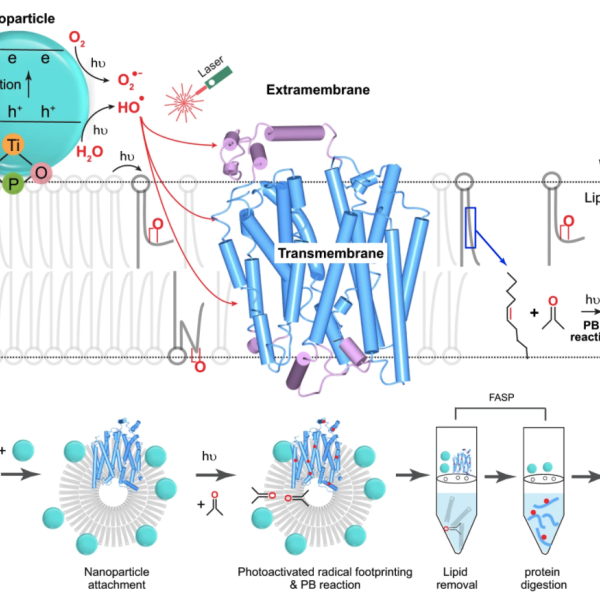
Laser-initiated Radical Trifluoromethylation of Peptides and Proteins and Its Application to Mass Spectrometry-Based Protein Footprinting, Ming Cheng, Bojie Zhang, Weidong Cui, and Michael L. Gross, Angewandte Chemie-International Edition, 56, 14007-14010 (2017). PMC5663992
Reactive oxygen species leave a damage trail that reveals water channels in Photosystem II. D. A. Weisz, M. L. Gross, and H. B. Pakrasi, Sci. Adv., 3, eaao3013 (2017). PMC5693562
Mass spectral studies of the biologically active stereoisomer family of e,e,e-(methanofullerene(60-63)-carboxylic acids, Michael Grayson, Joshua Hardt, Michael Gross, Subhasish K. Chakraborty, Laura Dugan, Current Anal. Chem., 14, 1-10 (2018)
Membrane Protein Structure in Live Cells: Methodology for Studying Drug Interaction by Mass Spectrometry-Based Footprinting, Guomin Shen, Shuang Li, Weidong Cui, Shixuan Liu, Yihu Yang, Michael Gross, and Weikai Li, Biochemistry, 57, 286–294 (2018). PMC5862532
Mouse and human monoclonal antibodies protect against infection by multiple genotypes of Japanese encephalitis virus, E. Fernandez, N. Kose, M.A. Edeling, J. Adhikari, G. Sapparapu, S.M. Lazarte, C.A. Nelson, J. Govero, Michael L. Gross, Daved H. Fremont, J.E. Crowe, Jr, Michael S. Diamond MS. mBio 9, e00008-18. doi.org/10.1128/mBio.00008-18 (2018). PMC5829823
Human IFIT3 modulates IFIT1 1 RNA binding specificity and protein stability, Britney Johnson, L.A. VanBlargan, Wei Xu, J.P. White, Chao Shan, Pei-Yong Shi, Rong Zhang, Jagat Adhikari, Michael L. Gross, Daisy W. Leung, Michael S. Diamond, and Gaya K. Amarasinghe, Immunity, 48, 487-499 (2018).
Mass Spectrometry-Based Fast Photochemical Oxidation of Proteins (FPOP) for Higher Order Structure Characterization, Ke Sherry Li, Liuqing Shi, and Michael L. Gross, Accounts of Chemical Research, 51, 736-744 (2018). PMC5936467
Primary and higher order structure of the reaction center from the purple phototrophic bacterium Blastochloris viridis: A test for native mass spectrometry, Yue Lu, Carrie Goodson, Robert E. Blankenship, Michael L. Gross, J. Proteome Research, 17, 4, 1615-1623 (2018). PMC5911391
Pulsed HDX Illuminates the Aggregation Kinetics of Alpha-Synuclein, the Causative Agent for Parkinson’s Disease, Eva Illes-Toth, Don Rempel, and Michael L. Gross, ACS Chem Neuroscience, 9, 1469-1476 (2018). PMC6013392
Allosteric Coupling of CARMIL and V-1 Binding to Capping Protein Revealed by Hydrogen/Deuterium Exchange, Britney Johnson, Patrick McConnell, Alex G. Kozlov, Marlene Mekel, Timothy M. Lohman, Michael L. Gross, Gaya K. Amarasinghe, and John A. Cooper, Cell-Reports, 23, 2795-2804 (2018).
Electron Cryo-microscopy Structure of Ebola Virus Nucleoprotein Reveals a Mechanism for Nucleocapsid-like Assembly. Z. Su, C. Wu, L. Shi, P. Luthra, G.D. Pintilie, B. Johnson, J.R. Porter, P. Ge, M. Chen, G. Liu, T.E. Frederick, J.M. Binning, G.R. Bowman, Z.H. Zhou, C.F. Basler, Michael L. Gross, D. W. Leung, W. Chiu, and G.K. Amarasinghe, Cell, 172, 966-978 (2018). PMC5973842
Stabilization of warfarin‐binding pocket of VKORC1 and VKORL1 by a peripheral region determines their different sensitivity to warfarin inhibition, G. Shen, S. Li, W. Cui, S. Liu, Q. Liu, Y. Yang, Michael Gross, Weikai Li, J. Thrombosis and Haemostasis, 16, 1164-1175 (2018).
Implementing Fast Photochemical Oxidation of Proteins (FPOP) as a Footprinting Approach to Solve Diverse Problems in Structural Biology, Bojie Zhang, Ming Cheng, Don Rempel, and Michael L. Gross, Methods, 144, 94-103 (2018)
MRI is a DNA Damage Response Adaptor during Classical Non-Homologous End Joining, Putzer J. Hung, Britney Johnson, Bo-Ruei Chen, Andrea K. Byrum, Andrea L. Bredemeyer, William T. Yewdell, Tanya E. Johnson, Brian J. Lee, Shruthi Deivasigamani, Issa Hindi, Parmeshwar Amatya, Michael L. Gross, Tanya T. Paull, David J. Pisapia1, Jayanta Chaudhuri, John J. H. Petrini, Nima Mosammaparast, Gaya K. Amarasinghe, Shan Zha, Jessica K. Tyler and Barry P. Sleckman, Molecular Cell, 71, 332-342 (2018)
The entropic force generated by intrinsically disordered segments can tune protein function. Nicholas D. Keul, Krishnadev Oruganty, Elizabeth T. Schaper Bergman, Nathaniel R. Beattie, Weston E. McDonald, Renuka Kadirvelraj, Michael L. Gross, Robert S. Phillips, Stephen C. Harvey, and Zachary A. Wood, Nature, 563, 584–588 (2018)
A Fast-Photochemical Oxidation of Proteins (FPOP) platform for free-radical reactions: the carbonate radical anion with peptides and proteins, Mengru Mira Zhang, Don L. Rempel, Michael L. Gross, Free Radical Biology and Medicine, 131, 126-132 (2019).
Protein-Metal-Ion Interactions Studied by Mass Spectrometry-Based Footprinting with Isotope-Encoded Benzhydrazide, Chunyang Guo, Ming Cheng, and Michael L. Gross, Analytical Chemistry, 91, 1416-1423 (2019).
Ebola Viral Protein 35 N-terminus is a Parallel Tetramer, Chamnongsak Ken Chanthamontri, David Jordan, Wenjie Wang, Chao Wu, Yanchun Lin, Tom J. Brett, Michael L. Gross, and Daisy W. Leung, Biochemistry, 58, 657–664 (2019).
Near-atomic Structure of a Giant Virus, Michael Rossmann, Qianglin Fang, Dongjie Zhu, Irina Agarkova, Jagat Adhikari, Thomas Klose, Yue Liu, Zhenguo Chen, Yingyuan Sun, Michael Gross, James Van Etten, and Xinzheng Zhang, Nature Communications, 10, Article number: 388 (2019)
Moderately-neutralizing epitopes in non-functional regions dominate the antibody response to Plasmodium falciparum EBA-140, Nichole D. Salinas, May M. Paing, Jagat Adhikari, Michael L. Gross, and Niraj Tolia, Infection and Immunity, in press
Protonation of Curcumin Triggers Sequential Double Cyclization in the Gas-Phase: An Electrospray Mass Spectrometry and DFT Study, June Cyriac, Justin Paulose, Mathai George, R. Srinivas, Daryl Giblin, and Michael L. Gross, Int J. Mass Spectrom., 438, 107-114 (2019).
Protein-Ligand Interaction by Ligand Titration, Fast Photochemical Oxidation of Proteins and Mass Spectrometry: LITPOMS. XR Liu, Mengru M. Zhang, D.L. Rempel, and Michael L. Gross, J Am. Soc. Mass Spectrom. 30, 213-217 (2019).
Recognition of Human IgG1 by FcγReceptors: Structural Insightsfrom Hydrogen−Deuterium Exchange and Fast PhotochemicalOxidation of Proteins Coupled with Mass Spectrometry, Liuqing Shi, Tun Liu, Michael L. Gross, and Yining Huang, Biochemistry, 58, 1074-1080 (2019).
Native Mass Spectrometry, Ion Mobility, and Electron-Capture Dissociation Provide Structural Information for Gas-Phase Apolipoprotein E oligomers, Hanliu Wang, Joseph Eschweiler, Weidong Cui1, Hao Zhang1, Carl Frieden, Brandon T. Ruotolo, Michael L. Gross, J. Am. Soc. Mass Spectrom., in press
Awards
2018, ACS Award in Analytical Chemistry, American Chemical Society
2017, Election as Fellow to AAAS, American Association for the Advancement of Science
2016, Plenary Lecture, American Society for Mass Spectrometry, Sanibel Conference
2013, Opening Plenary Lecture on History on first 50 y of Mass Spectrometry (1913-1963), American Society for Mass Spectrometry, Annual Conference
2013, EAS Award for Achievements in Mass Spectrometry, Eastern Analytical Symposium
2012, Wolfgang Paul Lectureship, Mass Spectrometry Societies of Germany and Poland
2011, Mass Spectrometry Society of Japan, Honorary Lifetime Membership
2008, Bruker Daltonics Lectureship, University of Konstanz, Germany
2008, Freiser Lectureship, Purdue University
2006, J.J. Thomson Medal for Service to Int'l MS, Foundation for International Mass Spectrometry
2005, Excellence in Mentoring Award, Washington University Graduate Student Senate
2005, New Jersey Distinguished Lectureship, NJ Section ACS Mass Spectrometry Discussion Group
2004, Outstanding Mentor Award, Washington University Graduate Student Senate
2002, Midwest Award for Achievements in Chemistry, American Chemical Society
2002, Excellence in Mentoring Award, Washington University Graduate Student Senate
2001, Watkins Visiting Professor, Wichita State University
2001, Outstanding Mentor Award, Washington University Graduate Student Senate
2000, Frontiers in Chemistry Lectureship, Wayne State University
2000, Plenary Lecture, Vienna Mass Spectrometry Colloquium
2000, Plenary Lecture, EnviroAnalysis 2000
1999, Field and Franklin Award, American Chemical Society
1998, Plenary Lecture, Assoc. Official Anal. Chemists' Int'l Meeting
1998, Plenary Lecture, HPLC International Symposium
1997, Plenary Lecture, Colloquium Spectroscopicum Internationale
1997, Plenary Lecture, Igler MS Tage, Innsbruck
1996, Guest Faculty, NATO School on Biol. Mass Spectrometry
1995, Pioneers in Chemistry Series, Texas A&M University
1995, Plenary Lecture, Western Biotechnology Conference, San Diego
1995, Plenary Lecture, FDA Mass Spectrom. Symposium, Washington DC
1994, Plenary Lecture, Australia/New Zealand MS Conference, Melbourne
1993, Guest Professor, NATO Adv. Study Inst. Biol. MS, Ischia, Italy
1993, Plenary Lecture, Colloquium Spectroscopium Internationale
1993, Plenary Lecture, Taiwan Int'l Chemistry Conference
1993, Plenary Lecture, Indian Society for Mass Spectrometry
1993, Lifetime Member, Indian Society for Mass Spectrometry
1993, Kraft Lectureship, Indiana University
1992, Plenary Lecture, European Tandem Mass Spectrom. Conf.
1992, Recognized as 50 Most Cited Chemists, Institute for Scientific Information, 1984-1991
1991, Plenary Lecture, Australian Symposium on Analytical Chem.
1991, Plenary Lecture, Elsevier Anal. Advances for the 90s Symposium
1990, Van't Hoff Visiting Professor, Int'l Graduate School, University of Amsterdam
1990, Guest Professor, NATO Adv. Study Inst. in Biol. Mass Spectrometry
1988, Albright & Wilson Visiting Professor, University of Warwick
1988, Plenary Lecture, American Society for Mass Spectrometry
1987, Pioneer Award, Commonwealth of Mass "In Search for the Health Consequences of Dioxin in Our Environment."
1987, Hertel Lectureship, University of Tennessee
1987, Alan Maccoll Plenary Lectureship, British Royal Society for Mass Spectrometry
1987, Plenary Lecture, British Royal Society "Spectroscopy Across Spectrum"
1986, J.C. Karcher Lectureship, University of Oklahoma
1986, Plenary Lectureship, Versailles International Workshop on Ion-Molecule Rxs.
1984, Distinguished Lecture Series, Indiana University
1984, Plenary Lecture, Swiss/French Mass Spectrometry Conference
1984, Third Cycle Lectures, Eidegenössische Technische Hochschule Lausanne
1978, Foundation Medal for Distinguished Teaching, University of Nebraska